
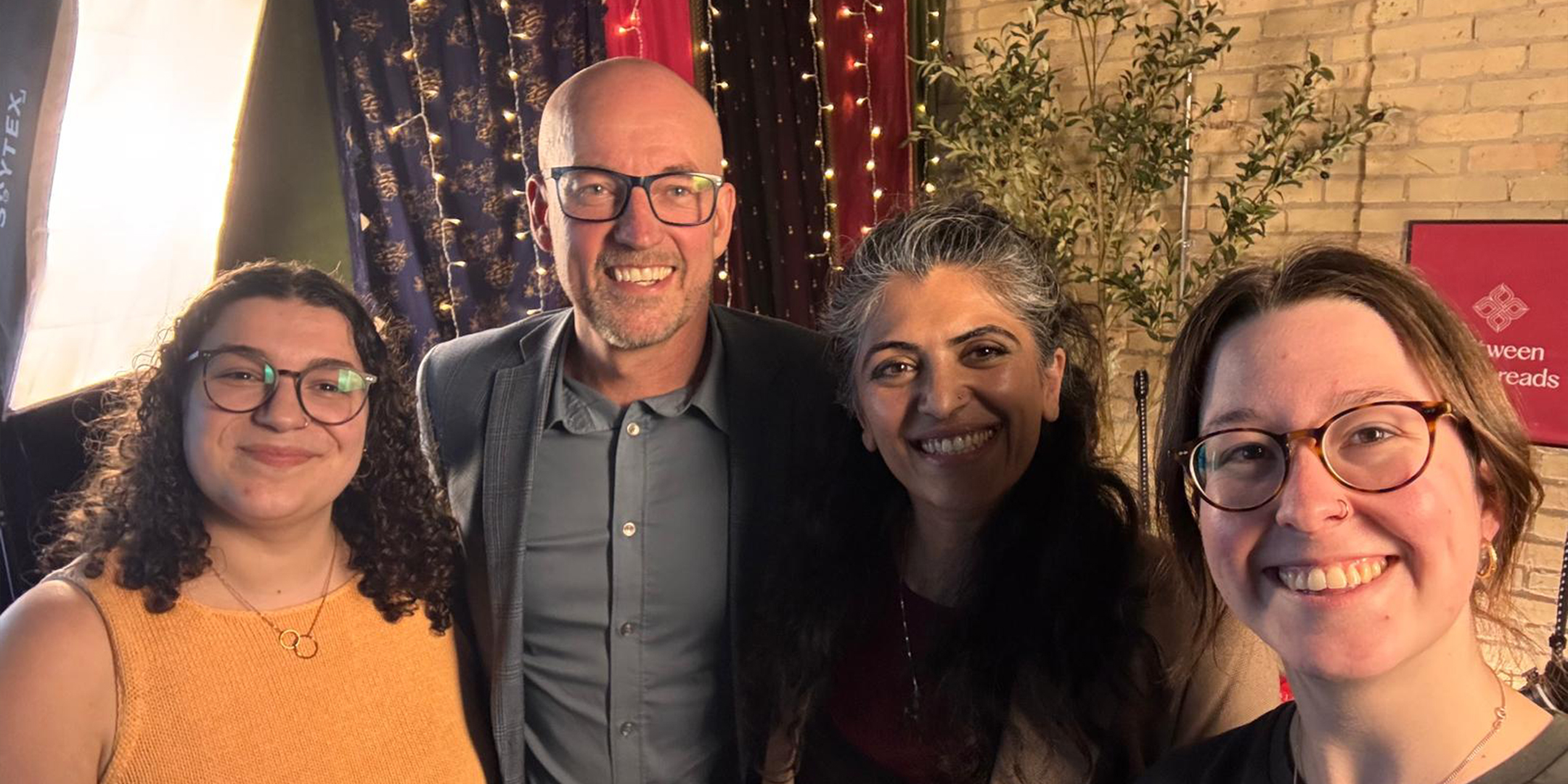
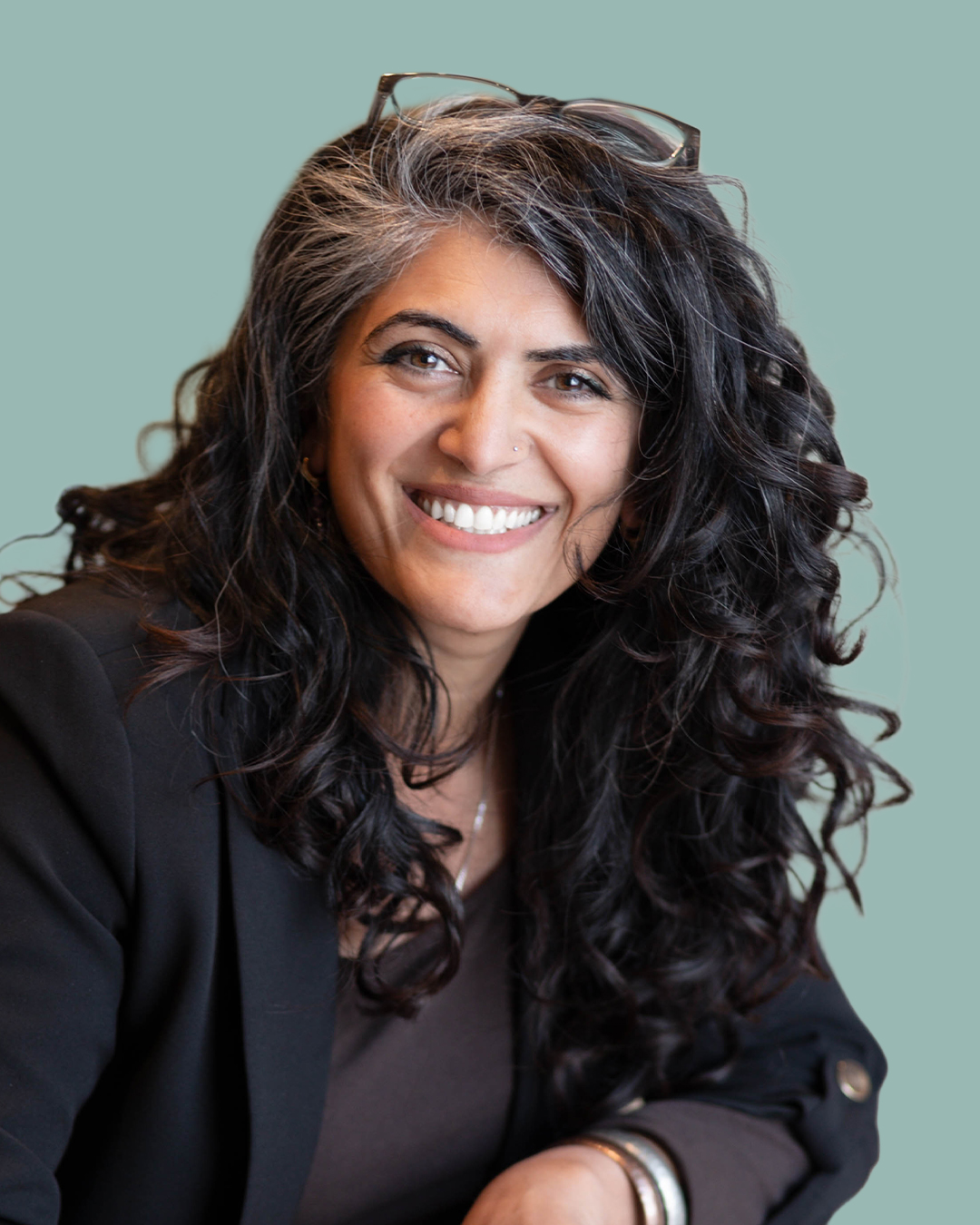
A few weeks ago, I sat down with Donovan Toews for an episode of Between the Threads. Most of you know this already, but in addition to being a fellow Planner, a business partner on a couple of side ventures, he is also my husband. Which meant our conversation occasionally wandered from planning theory to who apologizes first after an argument (he claims its him), whether there can ever be too many maps in a house, and why planners become disproportionately excited about well-designed roundabouts!
So, this season of Between the Threads has been exploring how cities tell their stories. Every guest has approached that question differently. Artists have spoken about murals. Musicians have spoken about sound. Historians have spoken about memory. Community leaders have spoken about belonging. As planners, however, we often begin somewhere entirely different. We are trained to think about relationships with the land, transportation, housing, infrastructure, growth management, environmental impacts, public engagement, policy, regulation, and systems. Necessary things. Important things. Yet as Donovan answered question after question, it was neat to see him returning to something deeper.
Care.
Care that is practical, visible, that quietly shapes how a place feels, well before anyone consciously notices it. At one point I asked him what he notices first when he visits a new city. I expected the answer to be about architecture or planning history or transportation systems. Those certainly featured in the conversation. But beneath each observation sat another question altogether.
Do the people here care for this place?
He spoke about care through how easy it is to move through a city. Observing if the systems work for the people expected to use them. He spoke about design, about the subtle details that most people may never consciously register, yet somehow feel. He spoke about tree canopies and sidewalks, about the way mature trees soften entire neighbourhoods and transform places that once looked sterile into places that feel loved.
Then we landed at litter.
I recently wrote about Winnipeg's relationship with litter after another spring (and summer sadly) spent watching snowbanks melt into piles of coffee cups, fast food wrappers, broken bottles, and the remnants of another winter forgotten beneath the snow, and worse yet - dragged into summer. Walking to work every Monday morning with nothing garbage lining the sidewalks.
Donovan reflected that litter happens to be one of the first things he notices when entering a city because it communicates something much larger than untidiness.
Litter raises a question about relationship. If we cannot care for the simplest expressions of our shared environment, what does that suggest about how we relate to one another, to our neighbourhoods, and to the places we collectively call home?
Planning often teaches us to evaluate cities through measurable indicators. Housing starts. Traffic counts. Transit ridership. Population growth. Employment lands. Servicing capacity. They all matter. Most planners spend a significant portion of their professional lives working with those kinds of information. Yet anyone who has travelled knows that two cities with remarkably similar statistics can leave us with entirely different emotional experiences.
One feels generous. Another feels hurried. One feels welcoming. Another feels indifferent. Neither feeling appears in a spreadsheet. That difference is fascinating.
Over the last few months, whether through Community Conversations, Compassionate Winnipeg, conversations at Canadian Institute of Planners's annual conference FUSION, or writing about belonging, I find myself returning to the same question from different directions.
How do we build communities where people genuinely feel they matter? Where care accumulates. Where maintained sidewalk tell stories. Where trees look and feel healthy, like they belong. Where multilingual signs and public art evoke curiosity about many ways of being.
None of these decisions, in isolation, transform a city. Together, however, they begin to create an atmosphere. They shape how we move through space. They influence whether we feel invited to linger or encouraged to leave. They communicate whose histories are visible, whose identities are acknowledged, and whose presence has been anticipated.
During our conversation, Donovan reflected on the recent renaming of Bishop Grandin Boulevard to Abinojii Mikanah. It wasn't just about changing a sign. He was reflecting on what happens when a city asks us to encounter another language, another history, another way of understanding the place we already inhabit. The unlearning that is required.
So here's the shift then: we assume care is about feeling comfortable. Yet, sometimes care asks us to unlearn and then start to learn differently. Sometimes it asks us to become slightly uncomfortable. Sometimes quite uncomfortable. Sometimes it asks us to recognize that our own story has never been the only story this place has carried.
As the conversation went on, we meandered into belonging. And specifically the risk with thinking about belonging as though it were a finite resource. As though more belonging for one community somehow means less belonging for another. Fear enters quickly when we imagine belonging as something to compete for.
Yet perhaps belonging behaves more like care itself. It expands through practice. The more people experience it, the more capable a community becomes of extending it to others.
As an immigrant, this question feels deeply personal. As a planner, it feels deeply professional. Because planning has always been about relationships. Relationships between people and land. Between neighbours. Between present needs and future generations. Between ecology and economy. Between memory and possibility.
The plans we produce certainly matter. The policies matter. The engineering matters. Infrastructure matters enormously. Yet all of those things ultimately shape one simple human experience.
How does it feel to live here?
That question can't be answered solely by technical expertise. It asks something of us as planners, designers, engineers, politicians, community leaders, artists, and neighbours. It asks whether we are paying attention to the thousands of small signals through which cities quietly communicate their values every day.
Do people feel seen? Do they feel safe? Do they feel invited? Do they feel respected? Do they feel cared for?
Perhaps those are not peripheral questions after all. Perhaps they have always been at the very heart of planning.
After all, long after people forget the zoning by-law that governed a neighbourhood or the engineering standards that shaped a street, they rarely forget how a place made them feel. They remember whether someone held the door. Whether the trees offered shade on a hot afternoon. Whether they heard laughter in the park. Whether they saw themselves reflected somewhere in the pulsing heart of the city.
Yup. Cities do tell stories. Perhaps the most important story they ever tell is whether they care.
You can listen to the full episode on any platform you use for your podcasts. You can also check it out on Youtube at: https://www.youtube.com/watch?v=XLz8kbthBHE


