

Why Memorialization is More Than Gravestones and Statues
Have you ever walked into a space and felt a sudden, inexplicable shift in the air? A sense that the ground beneath your feet is vibrating with an echo of something or someone who came before?
Happens to me on the regular.
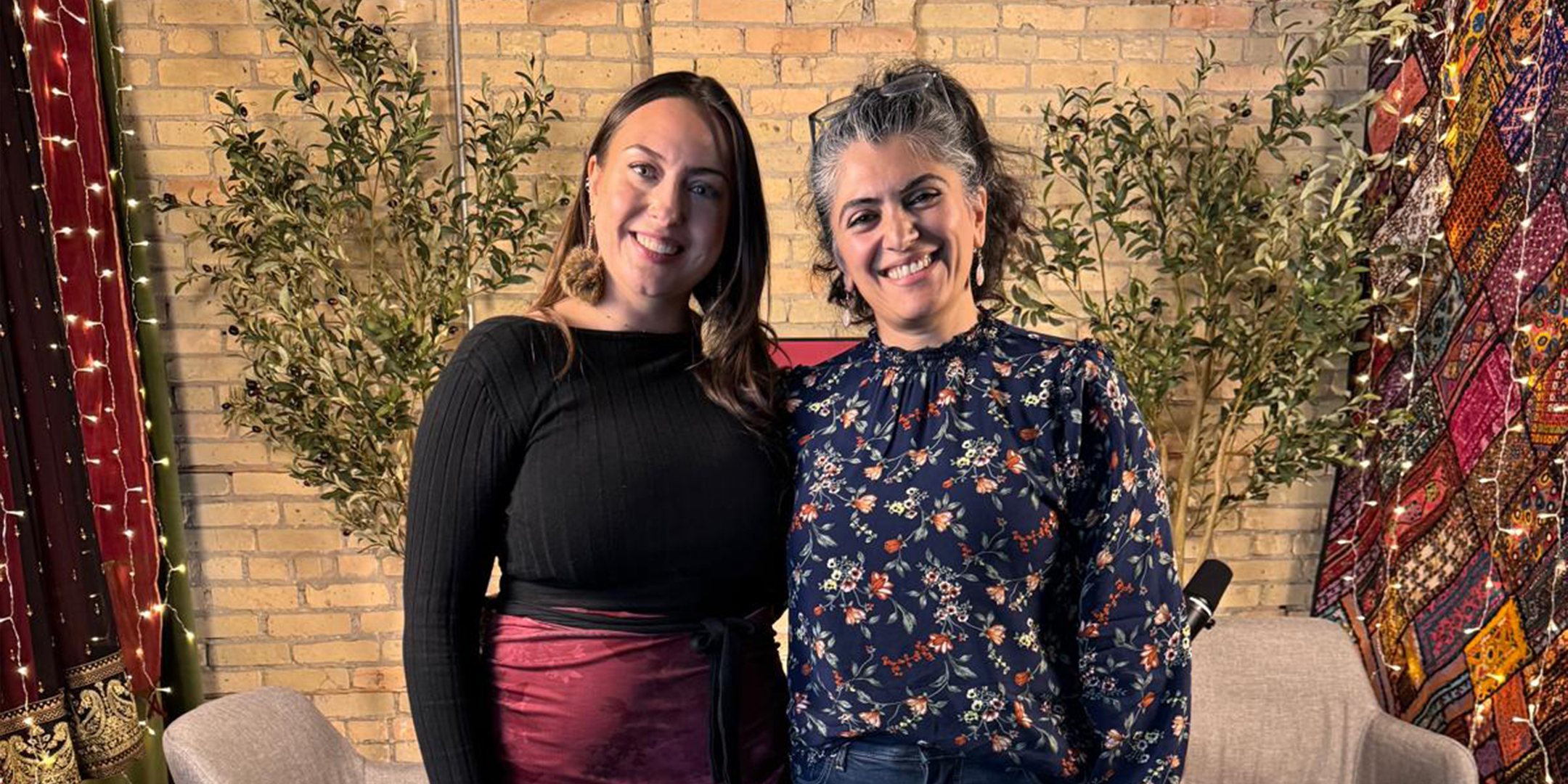
In a recent episode of Between The Threads (S2 E2 - If this City Could Tell a Story), I sat down one of the Partners at Narratives Inc., Desiree Theriault. Desirée is an award-winning Métis land designer, whose work sits at a deeply profound intersection: trauma-informed design, Indigenous cultural resurgence, and public memory.
Knowing Desirée, I wasn’t surprised when our conversation essentially turned into a masterclass on how cities store their secrets, how the land itself carries grief and celebration, and why true memorialization is an active, living future - not just a marker of some long forgotten past.
Thunderstorms and Forest Kitchens: The Making of a Land Designer
Before she was designing complex public realms, “Little Desirée” was a kid completely untamed by shoes, begging her parents to let her run outside during thunderstorms to soak her feet in the gutter puddles.
Because her family couldn’t afford provincial park fees, her grandparents practiced what she lovingly calls “guerrilla camping”; parking themselves out in the deep Manitoba bush for the summer. For Desirée and her siblings, the forest trail systems became their living rooms.
“We played kitchen or house in the forest. We had different rooms that we would find based on natural clearings occurring in the land. That became part of the story we came up with... I didn’t realize how much of an impact that had on me until now.”
Though she briefly detoured toward tech and computer science on the advice of an uncle who wanted to ensure she had a stable salary, her fiancé, Rui, eventually encouraged the plunge into environmental design.
On her very first day at the University of Manitoba, a professor asked the class to “imagine designing the places where you have your first kiss or your first family picnic.”
The lightbulb clicked. Desirée realized she didn’t just want to build structures; she wanted to design spaces that allow human imagination and memory to breathe.
But What is Memorialization, Really?
When most people hear the word memorialization, their minds instantly go to predictable places: cemeteries, bronze statues, or plaque-heavy monuments. But Desirée challenges us to blow that definition wide open.
“For me,” she explains, “memorialization is to be able to honor and reflect on the past, but also the present and what can happen in our futures.”
It is a holistic, multi-layered tapestry. It can hold a singular dark historical moment, but it can also hold acts of pure cultural celebration. Crucially, Desirée views the land as the ultimate archive. Buildings can be torn down and assets stripped, but the land remembers.
From Darkness to Light: The Path to Healing
We spoke extensively about her work on Kaatagoging, an initiative led by survivors of the Kenora St. Mary’s Indian Residential School. When sitting with these survivors, a powerful truth emerged: they wanted Canadians to understand the horrific reality of the residential school system, but they refused to be entirely defined by that trauma. They wanted their creation stories told; they wanted their healing honored.
This led to the conception of a land-based memorial, specifically, a procession trail designed to physically transition a visitor from darkness to lightness.
“The survivors talked about edible shrubbery, fruit trees, picking berries, or picking apples,” Desirée shared. “That becomes part of the caretaking of place and the passing down of memory to future generations. The memory continues to live as long as the place is nurtured by the community.”
Designing the Sacred in Public Spaces
Designing a sacred memorial for a completely open, public space comes with immense complexity. How do you honor deeply painful histories while inviting the general public into an active space?
Desirée’s touchstone for this is her extensive work on the redevelopment of the Alexander Docks in Winnipeg—a site layered with intense historical friction. It was the backdrop of the famous 1919 General Strike, but it is also the heartbreaking location where the body of Tina Fontaine, and several other Indigenous women, were recovered from the river.
How do you design a space that holds all of that?
The answer, Desirée notes, always comes down to prioritizing the voices of the families of Missing and Murdered Indigenous Women, Girls, and Two-Spirit folks (MMIWG2S).
The families didn’t want to completely isolate the docks; they wanted the space activated because public connection is a vital part of a city’s collective healing. The design solution requires a careful zoning of emotional needs: high-activity areas that build public awareness, side-by-side with protected areas of respite and quiet privacy where families can conduct ceremony with dignity.
The Responsibility of the “Story Listener”
In my own Planning and Peacebuilding work, I think constantly about the sacred relationship between the storyteller and the story listener.
When we design public spaces, we cannot control who the listener is. Passersby are often trapped inside their own heads, rushing to work, or simply not emotionally ready to engage with a heavy history.
But as Desirée pointed out, just planting the architectural seed matters:
“They may not be ready to acknowledge or be part of that conversation yet, but now they know that this place is here. They know there’s a place of learning, a place of healing. That already plants the seed.”
It forces us to ask a vital question as citizens: Whose story is missing from the landscape we are walking through? We can’t notice what’s missing until we actively slow down to read the layers that are there.
Desirée’s Curated Winnipeg List
If you have a visitor staying in Winnipeg for a month who truly wants to feel the “genius loci” (the spirit of place) of our city, Desirée recommends skipping the standard tourist traps and visiting these five sites with intentional eyes:
- The Forks: The historical, ancestral gathering place of the Red River Métis and First Nations for thousands of years. It still beautifully maintains its original mandate of connection.
- The Exchange District: (Yes, we are biased because our studio is here!) A place where you can visually track how industry revolutionized the city, but also look deeper into the hidden nuances -like the original Métis river plots reflected in the names of the streets.
- St. Boniface: Deeply connected to Desirée’s childhood, this neighborhood showcases the French Métis community identity through its unique long-lot land distribution along the river.
- Assiniboine Park: A triumph of ecological safekeeping that honors the millennia-old fauna and flora of the region.
- The Living Prairie Museum: A pristine, untouched testament to what this land looked like before concrete took over -where you can stand in the tall prairie grass, imagine the ancient bison herds, and experience the famous, vast, mathematically impossible Manitoba sky.
Smelling the Mangoes
I wrapped up our chat by sharing a story about my parents. Years ago, they came to Winnipeg in October to see if they could transition to living here. It was a failed experiment to say the least. Between the bitter winter, the bread slices being “too thick,” and the chicken drumsticks being “too big,” they just couldn’t find their footing.
Baba Jaani had a very specific complaint that always stuck with me: “You can’t even smell the mango here unless you touch it.” When I asked why that mattered so much, he told me: “If we can’t smell it, we don’t know what land it comes from. Smelling it is a way to honour the earth it grew in.”
That is exactly what Desirée’s work does. By uncovering the hidden narratives of our public spaces, she gives our cities their “smell” back. She ensures we know exactly whose land we are standing on, what grief it has absorbed, and what future blessings (Baraka) it has left to yield.
When you walk through your local park or downtown core, what stories do you feel embedded in the landscape? Whose history is highlighted, and whose is pushed to the margins? Let’s keep the conversation going in the comments below.


