
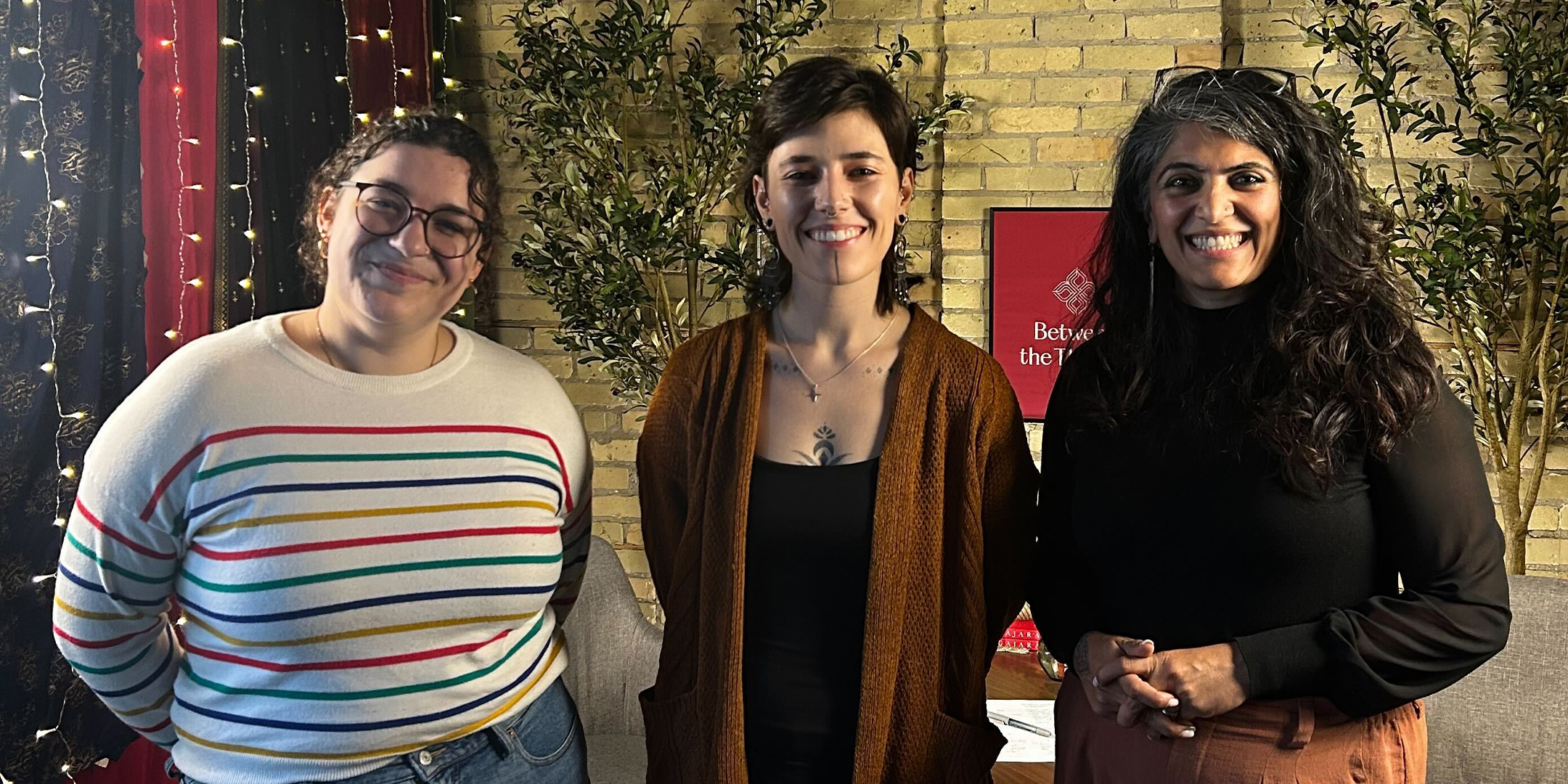
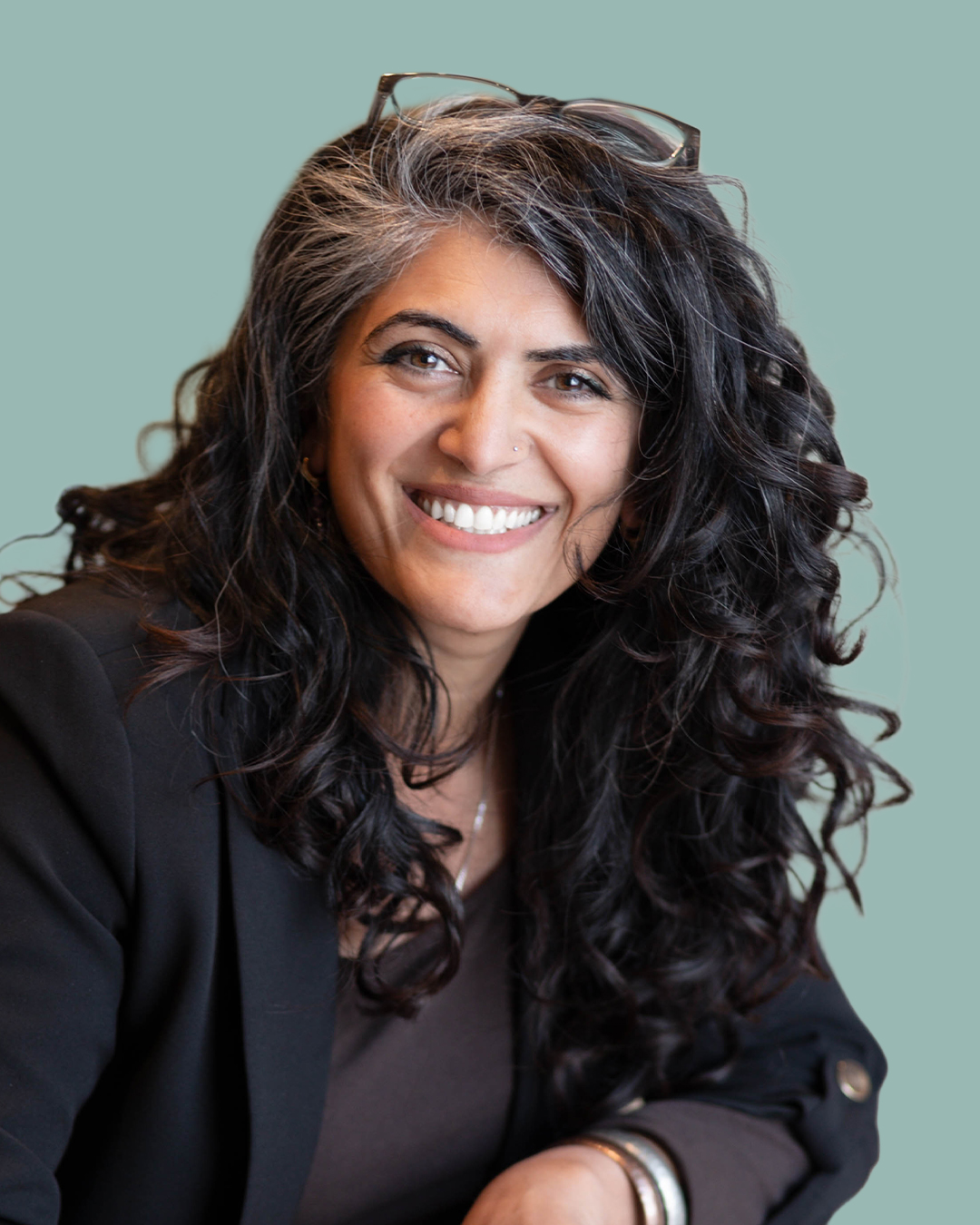
Recently we hosted Justine Proulx on our podcast Between the Threads. So many nuggets from that convo have been dancing in my head ever since!
Justine is a Métis tattoo and mural artist based in Winnipeg. At one point in our conversation, she was describing workshops she runs with elementary school students and explained that her favourite age group to work with is often kindergarten through Grade 3. Not because they are the most technically skilled artists, but because they have not yet learned to doubt themselves.
Seriously. Imagine a super sad emoji here!
When she works with younger children, nobody thinks they are bad at drawing. Nobody hesitates before putting pencil to paper. Nobody worries about whether their artwork will be judged. They simply create.
As I listened, I found myself thinking about how often adults begin from the opposite position. We obsess with whether we're qualified enough, skilled enough, experienced enough, or knowledgeable enough before allowing ourselves to participate in something. To make matters worse, somewhere along the way, many of us learn that creativity belongs to artists, musicians, writers, and designers rather than recognizing it as something deeply human. Something we all carry in many different colours and shades within ourselves!
The irony is that creativity never actually leaves us. It simply finds different outlets.
Sometimes it appears in the stories we tell about ourselves. Sometimes it appears in how we raise our children, organize our communities, build organizations, resolve conflict, cook meals, or care for each another.
Creativity is not simply about producing art. It is about making meaning.
This season of Between the Threads explores how cities tell stories. We often think about storytelling as something that happens in books, films, podcasts, or conversations, but cities are constantly communicating. They communicate through architecture, public spaces, monuments, languages, street names, public art, and the histories they choose to celebrate. Every decision about what becomes visible and what remains invisible contributes to a larger narrative about who belongs, whose experiences matter, and how a community understands itself.
What struck me about Justine's work is that she operates across multiple scales simultaneously.
As a tattoo artist, she works with individuals who are often navigating significant life transitions. She spoke about clients grieving the loss of loved ones, processing infertility, commemorating milestones, celebrating recovery, or marking the end of relationships. The tattoo itself may be a flower, an animal, or a symbol that appears ordinary to an outside observer. Yet for the person wearing it, the image becomes attached to a much larger experience.
She talked about how early in her career as a body piercer, she worked with a woman who came in for a nose piercing on the same day her divorce was finalized. The woman cried during the appointment. Not because of the physical pain, but more because the piercing represented something she had wanted for years but just couldn't. The piercing became a marker of agency, freedom, and the beginning of a new chapter.
Listening to that story, I found myself thinking about rituals.
Across cultures, humans have always developed rituals to help us navigate change. Some are formal and collective. Others are deeply personal. What they have in common is that they create micro-moments of recognition. They acknowledge that something important has happened and that we are no longer exactly who we were before.
In many ways, tattoos can function similarly. They become physical reminders of transformation. They can create a visible marker of an otherwise invisible journey.
What fascinated me even more was Justine's discussion of cover-up tattoos. Before our conversation, I assumed most cover-ups were primarily about correcting what people may have regretted after the fact, or outdated artwork. Turns out its so much more! Justine talked about clients who wanted to cover tattoos associated with painful memories, unhealthy relationships, or experiences that no longer reflected who they had become. In some cases, the artwork itself was technically excellent.
What people wanted to change was not the image, but the meaning attached to it.
There is something so deeply human in that impulse. We can't rewrite the past, but we can sure renegotiate our relationship to it. Individuals do this. Families do this. Communities do this. Cities do this.
The events remain unchanged. Perception evolves. Context deepens. Meaning evolves.
Perhaps this is one reason I found myself drawn to Justine's reflections on mural-making. Unlike tattoos, murals exist in public space. They become part of the everyday landscape of a community. Children walk past them on their way to class. Residents encounter them on their way to work. Visitors form impressions of a city through them.
When Justine works with schools, she begins by asking students what they want the mural to communicate. Often the students respond with words such as respect, kindness, community, belonging, or love. She then invites them to think what those ideas look like if they had to be expressed through images rather than words? Brilliant!
I LOVE this question because it pushes us beyond abstract values and into relationship. How do we know when belonging is present? What does respect look like in practice? How do communities communicate care?
These are not only questions for artists. They are questions for educators, city builders, planners, community leaders, and anyone interested in creating places where people can thrive.
Near the end of our conversation, Justine reflected on her mural Returning to Our Roots at the RBC Convention Centre. If you haven't seen it, have a look next time you're walking through downtown Winnipeg!
As she described the work, she spoke about how much of contemporary life is organized around speed, efficiency, productivity, and urgency. We are encouraged to move faster, produce more, and optimize every available moment. Yet the natural world continues to operate according to entirely different rhythms. Seasons still change gradually. The moon still moves through its cycles. Rest and renewal remain necessary. And that is what the mural is about.
Perhaps part of what many people are searching for right now is not simply healing, but reconnection. Reconnection to community. Reconnection to place. Reconnection to creativity. Reconnection to ways of being that remind us we are part of something larger than ourselves.
Listening to Justine, I was reminded that art can play an important role in that process. It may not carry all the answers, but it sure can create opportunities for reflection. Art invites us to pause long enough to consider who we are, where we come from, and what we want to carry forward.
And in a city as diverse, complex, and evolving as Winnipeg, that feels like important work.


