

Maybe you’ve never thought about clothing as anything more than something you wear.
But I’m sure we all have that favourite shirt that brings us comfort, worn in perfectly over time. Maybe it reminds you of a concert, a marathon, a travel destination, or a version of yourself you still miss sometimes.
Maybe you have a specific outfit you wear when you need to feel confident, still carrying traces of your favourite perfume. Maybe you’ve cried into the sweater of someone you loved after they were gone. Maybe there’s a bin tucked away somewhere holding baby clothes you can’t quite bring yourself to give away. Maybe you’ve driven past a business flying your country’s flag and suddenly felt a little more seen. Maybe you’ve sewn a patch or button onto old jeans, giving them another life.
Maybe you’ve worn something in resistance.
In tradition.
In celebration.
Fabric often tells stories long before we realize it does.
It carries identity, belonging, pain, hope, migration, grief, history, memory. Sometimes quietly. Sometimes loudly. Sometimes stitched so deeply into us we forget where the fabric ends and the story begins.
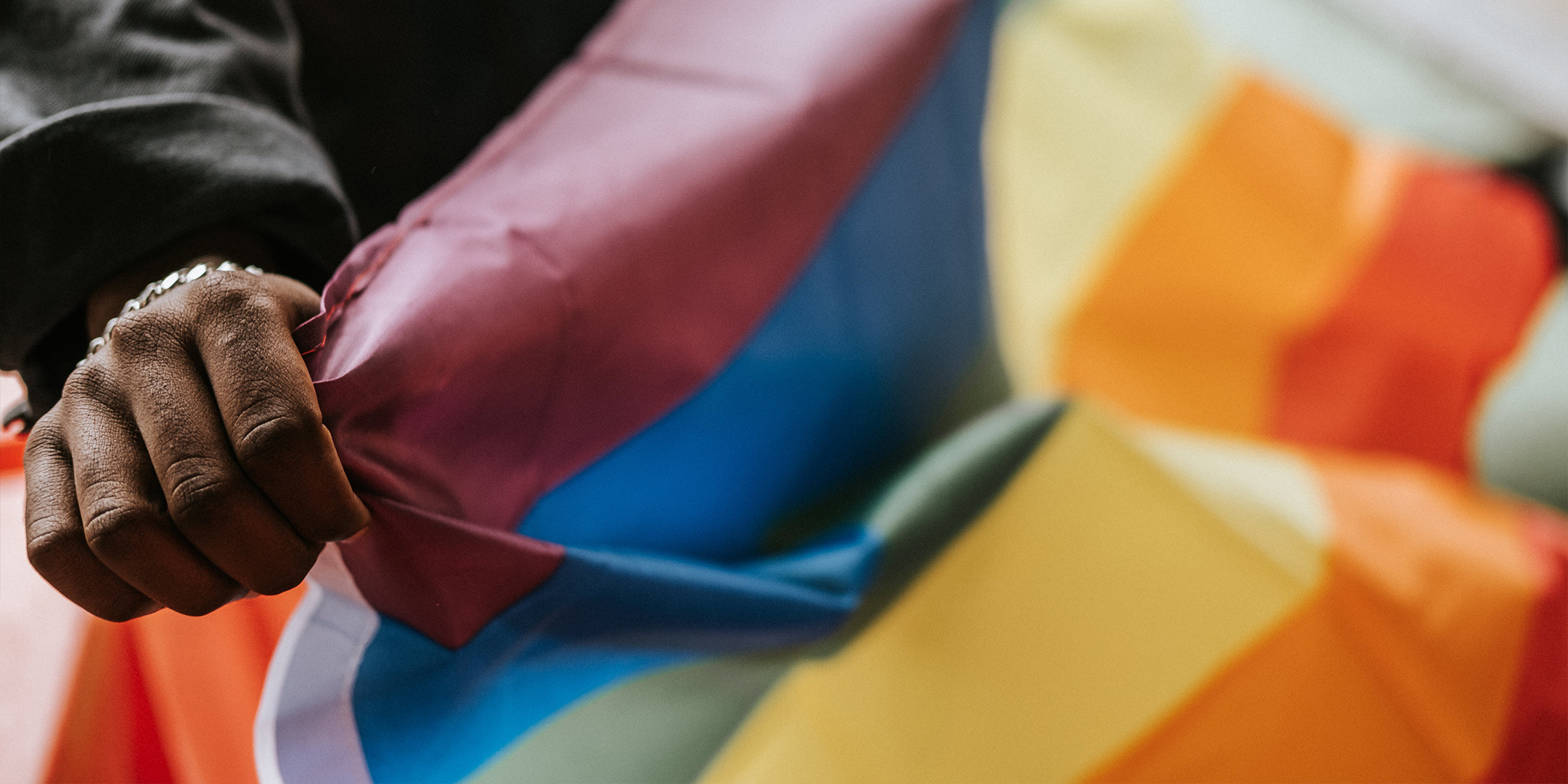
The Pride Flag
For many people, the Pride Flag represents the freedom to be seen fully, sometimes after years of hiding pieces of themselves to survive.
Hung from windows, pinned on backpacks, worn across shoulders, waved in crowds, the flag becomes a signal: you are welcome here as you are.
It carries joy, celebration, grief, resistance, and community all at once. A reminder that identity is not something everyone gets to wear safely.
Some fabrics become a way people find each other.
The Sari
A sari often carries generations within its folds.
Passed down between mothers, daughters, aunties, cousins; worn at weddings, celebrations, ceremonies, and prayers, the fabric becomes attached to memory as much as tradition.
But the sari also tells a story about continuity. About culture surviving migration, distance, and time. About the ways people carry home with them, even when home changes shape.
Some fabrics remind us where we come from.
The Apron
Aprons rarely appear in family photos, yet they often witness some of the most intimate parts of our lives.
Recipes made from memory. Stories shared over cutting boards. Quiet labour repeated every day without recognition.
Stained with flour, oil, berries, coffee, turmeric; aprons hold evidence of caregiving. Of nourishment. Of people finding ways to love each other through small, ordinary acts.
Some fabrics carry the invisible work that holds communities together.
The Métis Sash
The Red River Métis sash carries history woven directly into its fibres.
Traditionally practical in use, the sash also became a visible marker of identity, kinship, trade, resilience, and culture within Red River Métis communities. Passed across generations, its threads carry stories of movement, survival, and belonging.
Some fabrics refuse to let history disappear.
Its threads remind us that identity is not static. It is lived, protected, shared, and carried forward.
The Hockey Jersey
In Winnipeg especially, hockey jerseys often become less about sport and more about belonging.
They turn strangers into community for a few hours. Families into traditions (maybe even superstitions). Cities into collective feeling.
Passed between generations, worn through heartbreak seasons and impossible hope, jerseys reveal how deeply humans long to feel connected to something larger than themselves.
Some fabrics make belonging visible.
The Baby Blanket
A baby blanket may be one of the first ways we experience comfort.
Softness before language. Warmth before memory fully forms. Protection before we understand the world around us.
Long after children outgrow them, many blankets are kept tucked into closets and memory boxes because they become impossible to separate from love itself.
Some fabrics hold tenderness long after moments have passed.
Like stories, fabric stretches. Frays. Repairs. Gets passed between hands.
It absorbs traces of the people who touched it before us.
And maybe that’s what makes it feel so human.


