

Growing up, my parents never openly argued in front of us.
But we always knew when they were fighting.
No matter how upset Mama was with Baba, she would still cook for him. And no matter how angry he was with her, he would eat. Let's just say Punjabis don’t compromise on food. No such thing as a food protest—at least not in our household.
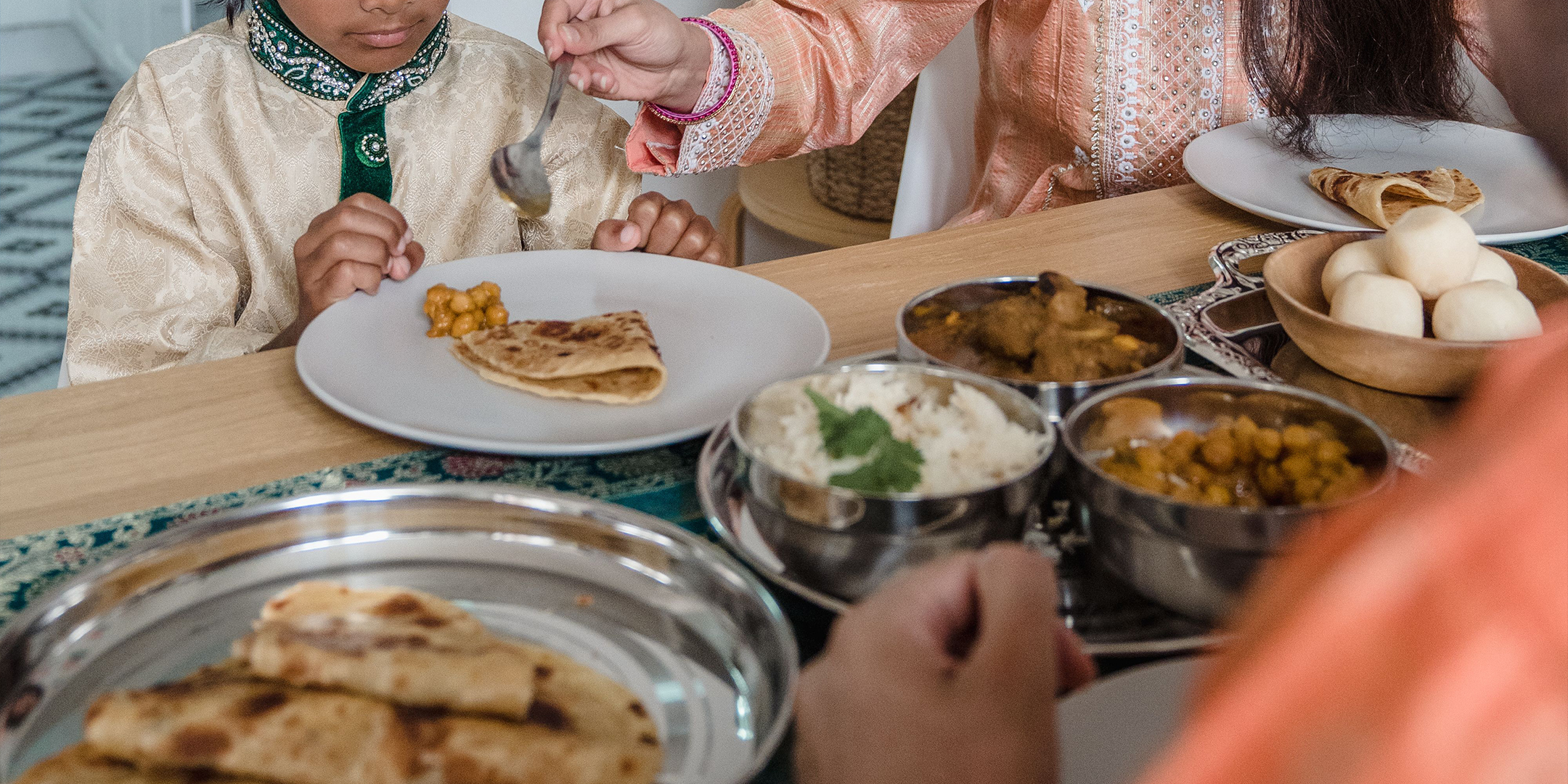
Still, we could always tell something was off. As the dishes were gently laid out on the dartarkhaan—achaar gosht (spice pickled mutton), aloo methi (potatoes with fenugreek greens), pulao (pilaf), roti—one of the dish bowls would be subtly slid toward my father. Mama would glance at us and with eyes you couldn't misunderstand: don’t touch that one.
And we knew the assignment.
That dish, always just one, would be loaded with extra mirch. Extra green chillies. Lots of them.
As we'd eat, Baba's sniffles would grow louder with each bite. But he wouldn’t dare stop. He wouldn't reach for anything else. Not even the raita (yoghurt) that could alleviate the agony a tad! Nope. He’d eat his fill, eyes watering, while we quietly cleared the table, trying not to laugh. Mama, meanwhile, would stand taller, her face radiating victory. Her final move perfectly executed.
By the next morning, they’d be back to normal.
It was their way. A quiet choreography. Their personal vocabulary of protest, power, and care.
What Extra Mirch Teaches Us About Conflict
I return to this memory often in my work as a planner, and peace negotiator. Because for all our contemporary language around dialogue - facilitation, engagement, reconciliation - we often forget that the most enduring forms of communication aren’t verbal. They're embodied, sensory, and deeply cultural.
That dish with the extra mirch? It was conflict resolution. It was an invitation to remember their respective places. It was a protest, sure, but it was also a gesture of continuity.
In our Punjabi-Kashmiri home, you didn’t stop feeding the people you were upset with. You just....changed the seasoning.
Recently while visiting my folks in Lahore, I asked them if when they argued, Baba still ate the spicy dish, and without missing a beat, he said 'oh Puttar, saadi majaal?' (trans: how can I dare not to?), and Mama just smiled.
That evening I went down a few rabbit holes:
- What are the culturally-specific ways people express dissent without saying a word?
- What are the rituals that allow people to stay connected, even when they are furious?
- What does it mean to offer extra mirch instead of silence?
- And how do we honour the wisdom embedded in those choices?
In Planning and Peacebuilding: Let the Room Burn a Little
In urban planning, we're taught to seek "neutrality." In mediation, we’re told to maintain “safety.” But what if real safety isn’t about avoiding heat, but moving through it?
Too often, we dilute what needs to sting. We deflect discomfort with polished frameworks. We cave to the want of comfort, calling it safety, when in fact, it’s avoidance. We excuse ourselves from hard feedback in the name of care, when hearing it might be the very thing that changes us.
What if we redefined safety not as the absence of tension, but as the ability to stay present inside it?
What if part of our role is to let the room burn a little and trust that people can withstand the heat?
Not Everything Needs to Be Said to Be Understood
The extra mirch was not just about conflict. It was a reminder: I see you. I’m still feeding you. But don’t think I’ve forgotten.
In today’s planning and peacebuilding landscape, we need frameworks that go beyond surveys and consultation tables. We need to understand the emotional recipes people carry. Their inherited rituals of protest. Their sensory vocabularies of grief and respect. Their ways of expressing rage that are still, paradoxically, rooted in care.
Because real dialogue is not always verbal. And sometimes, the most powerful message comes in a dish you’re expected to eat.
How Do We Do That?
To meaningfully address conflict in planning or peace negotiations, we must expand how we understand communication, dissent, and cultural expression. This requires both technical rigour and emotional intelligence. Practically, this looks like:
- Recognizing that not all feedback is verbal or linear. Stories, rituals, refusals, even silence may be culturally specific ways of expressing grief, disagreement, or protest. Learn to listen between the lines.
- Designing processes that can hold emotional data, not just technical data. When a participant shares a story about their land or community, treat it as vital information. It may carry more weight than a GIS layer or feasibility report.
- Allowing tension to surface without shutting it down. A heated meeting isn’t necessarily a failure. Maybe its an indicator that something truthful is being named. Redefine safety not as the absence of discomfort, but the ability to stay present through it.
- Asking better questions. Move beyond “What do you think of this project?” to questions like “How have decisions like this impacted your family or territory in the past?” or “What’s at stake for you that may not be visible on paper?”
- Resisting the urge to sanitize or over-script public engagement. Genuine consultation may be less orderly but it is more honest. Allow for emotion, metaphor, and pauses that don’t fit into standard formats.
- Practising cultural humility. Understand that in some communities, a gesture (a shared meal, or the lack of one) may say more than a formal submission. Learn how cultural protocols express power, dissent, and continuity.
- Expanding what we count as “data.” Emotional, symbolic, and relational forms of expression are valid and instructive. If we ignore them, we miss the most critical dynamics of a conflict.
Because sometimes, the clearest message in a consultation process doesn’t come through a comment form. It comes through the chilli in the food. And someone still choosing to feed you, even when they’re furious, is a form of dialogue we must learn to honour.
What is one thing you've learned about conflict that no training or textbook ever taught you?


